That first December long ago

… in Cincinnati Ephraim and Sadie had told Helena how the Epstein family celebrated Chanukah. Though the Jewish festival of lights was based on history and the German tradition muddled up Christianity with pagan folklore, the two celebrations had in common the deepest faith of all —

OLYMPUS DIGITAL CAMERA

— the miracle of light in darkness. Now, along with readings from the Gospels of the story of the son of God born in a stable, the children heard about the candelabrum and the oil for one day which lasted for eight in the Temple. Jesus would have known this story too, Ephraim made sure they understood.

We jump ahead here to Chapter 35, Still Full of Sap, in Bethany, West Virginia 1885-87 in order to celebrate Christmas. Ephraim here is happily married and father of four young children. Next time, back to his chronology, continuing med school in New York City 1858. Meanwhile, happy celebrations to you.

Once his life as a medical student…

…had settled to a routine, the course of study at New York’s College of Physicians and Surgeons was intensive. The college had two main halls — the upper, with a skylight, was for anatomy, physiology and surgery. The afternoons saw Ephraim next door in the lab building, training in dissection and sciencemuseumukchemistry. His entire being — even that part of him committed to the Lord — was engaged, stimulated and challenged by the pace and breadth of learning. He thought of his father forbidding such worldly learning. He tried not to think of Mama at all.
In Chapter 12, Bellevue, Ephraim embarks on three years of sponsored medical study and training, finding friends and a new mentor but now severed from his wife and beloved Mama. It’s 1856-7 when advanced medicine relied on ‘heroic therapy’ — drastic treatments including purging, sweating and bleeding. Photo here is from the Science Museum, London, a case and lancet for opening a vein. It is dated 1792, but bleeding was the common treatment from earliest known history up into the later days of Ephraim’s practice as a physician.

Image

And then the blow fell.

A letter from home at last, but it was bordered with black, the only words: ‘O my son Absalom, my son, my son Absalom!’ At the bottom his parents names and the numbers 1829 – 1853: the dates of Ephraim’s birth and his revealed conversion to Christianity. They had declared him dead. haworth

The room spun and he gripped the sides of the wooden chair he sat in. Trembling, he gathered his scarf and hat and hurried down the staircase into the biting air of gray November. He walked fast, blindly. He sped on, driven by grief, by horror: what had he done? He had found his own God. And now his parents had severed him.

Having successfully begun at seminary in Chapter 11, At Andover, Ephraim breaks down in health and mind at his family’s reaction to his conversion. He learns new lessons in endurance, finding support in the household of his teacher, Professor Calvin Stowe, and Mrs Harriet Beecher Stowe, author of Uncle Tom’s Cabin. Will Ephraim see his wife and daughter again? When I am a physician, he vows, then I will rescue them.

Ephraim’s farming skills,

though still raw, were welcomed with almost as much joy in Harrison as his erudition and possibly even his conversion. Side by side with Brother Solomon and others he worked the hundred acres. All the while,

every day, every evening, they studied, read, debated, interpreted. Linguistic disputation, phrase-by-phrase, sometimes word-by-word, discussion, the passionate rationality of Talmudic debate turned with all its strength to the New Testament. In the talk and learning, this inner exploration and pushing out of boundaries, this freedom to question everything, Ephraim experienced the pure oxygen of encouragement.

And so, in Chapter 10, Melioration, Ephraim spends three years among Hebrew Christians until he is rewarded with an offer of medical school — on one condition. ‘I wrote to Mama and Papa to tell them I am a Christian. I pray it doesn’t kill her.’

‘Do you dare?’

‘You don’t — you’re afraid!’ Benjamin crowed.

P1040772

‘You think my faith cannot hold its own? My intellect?’ Anger made Ephraim’s voice harsh, and then ironic. ‘I dare say I can emerge from a Christian service unscathed.’ The way was wider here and they easily walked abreast, thumping their improvised walking sticks, walking fast in the competitiveness of friends. He told Benjamin another road story from the Shermans’ Bible. And so they made a bet. On the next day, which was Sunday, if they found themselves in sight of a church, they would attend it.

Curiosity, challenge… the two Jewish friends on a summer break in New Jersey, 1851, egg each other on. In Chapter 9, The Road to Metuchen, they have an encounter that will change their lives forever.

They had started with Proverbs,

and set on a course of reading the Old Testament aloud to improve Ephraim’s English. Judge Sherman was avidly curious about his employee’s Hebrew insights. They read for half an hour most evenings, except when calving and lambing interrupted. Ephraim was fascinated

DSCN1156

by the translation of his familiar holy writ into English. It seemed fresh, new, as if just written. Yet familiar and safe, the same Lord God he knew, the same forefathers, the same Israelites. Tonight’s reading was about the burning bush, a favorite of Ephraim’s from childhood: how could a bush burn with fire and yet not burn? ‘I should like to hear that in the Hebrew,’ said the judge. More and more frequently, he asked for the language he believed the first Christians prayed in.

Ephraim is still a farmhand, but with a kindly, intelligent employer. When an invitation to demonstrate his Hebrew at the local church ensues, Ephraim declines, although curious. By the end of Chapter 8 (I Will Put Ephraim to the Yoke) he is longing to be among Jews.

She shifted her bodyweight,

… he heard her breathing, she gave a low moan. He pressed his head against her flank and stripped his fingers down the length of the first teat to hear the stream of milk hit the bottom of the oak bucket. His hands were strong now, and hardened with calluses. If Papa, Mama, Zayde could see me… he thought of the yellow house of his childhood, felt again a fool to remember how he took milking for granted, believing any peasant or dairymaid could do it.

20150731_102921So, Ephraim got work at last, as a poorly paid, inexperienced farmhand. He crossed over the river to The Country Beyond (Chapter 7) and a labour bureau in Hackensack, New Jersey. After a season Squire Ackerman ends the job. Ephraim has to hope for farm work with blind Judge Sherman…

AmaReka… sounding like America,

… in Hebrew it meant hollow people — the so-called good life, all hard work and no respect for the old ways. Hollow indeed — if I get hard work I will thank the Lord, Ephraim vowed. He started a second letter to follow the one that announced his safe arrival after the nightmare voyage. They must believe! He set out telling some of the astonishment that was America. But after three lines he faltered, more depressed than ever. He tore off the strip of paper and crumpled it, carefully saving the rest of the sheet.

Times Square, NYC

AmaReka, America

It’s still New York City, 1850, in Chapter 6, Amereka, and Ephraim is down to his last few dollars as he struggles to find work. Should he give up and buy a ticket home?

How to start in this amazing,

…thriving, bustling city? With a tour by Uncle Jacob, of course… he halted at the corner of Canal and Broadway which was indeed broad — but unpaved, just like a rutted country road. DSCN2097The Yiddish, German and Russian of their neighbourhood had given way to raw Yankee English, and to horse traffic shouts and rumbles, the hawking and spitting of men, the barking of dogs. Ephraim translated the signs on the buildings: College of Health, Watches and Clocks… his spirits rose with the energy of it all: work, America, freedom!

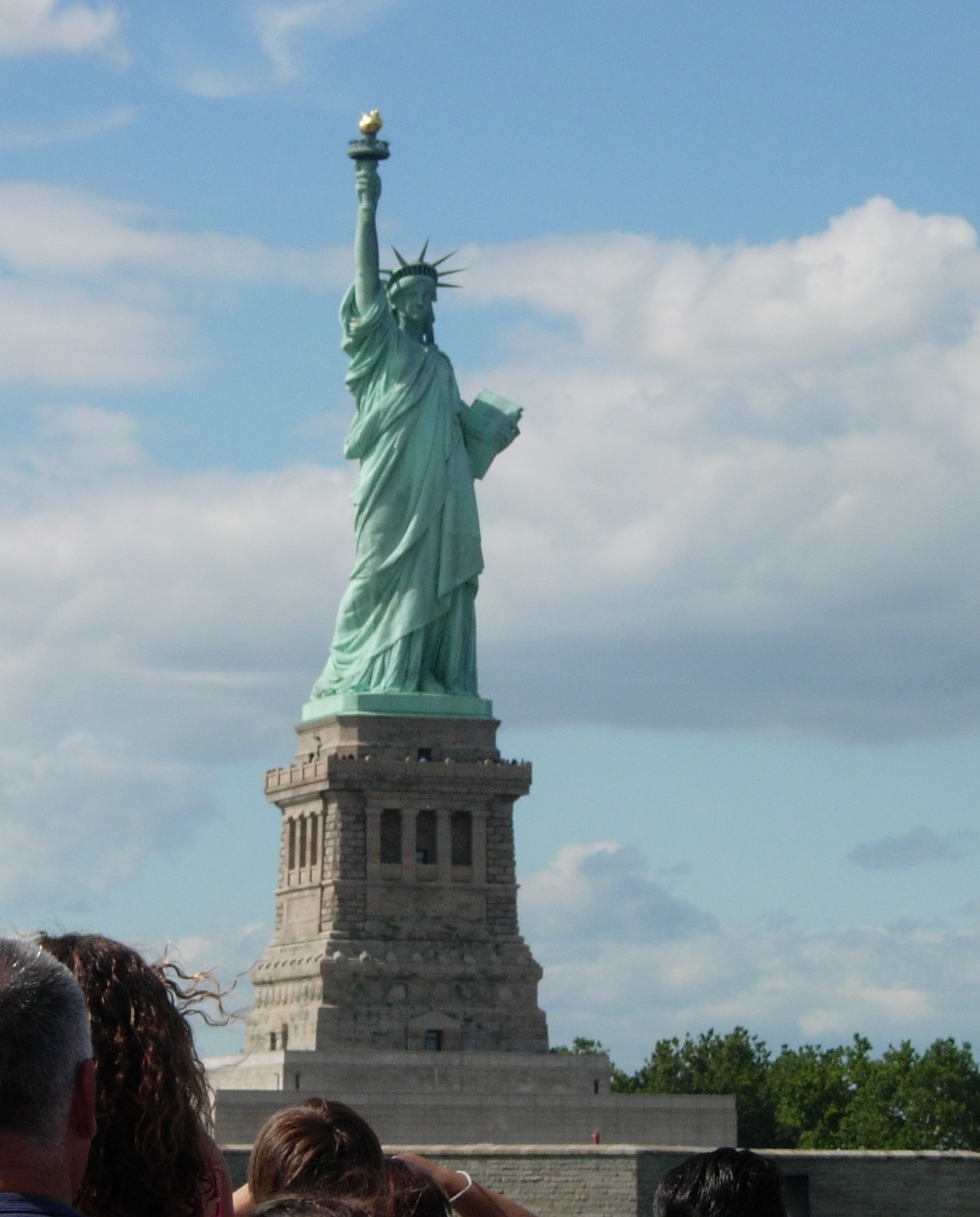
But of course there was no Statue of Liberty to greet Ephraim when he arrived in New York New York (Chapter 5) in 1850. This was a raw, growing city, where Fifth Avenue stretched up only as far as 23rd Street. Surely he would easily find work… or would he?

Image

Looking up to the broad, taut sails…

… awe filled Ephraim at the power of wind, the power of the Lord. The heaviest storm season in these northern waters had begun, and the swells and heaving of their ship on the vastness of the ocean increased. When the gusts hit, down they went to their hell hole still reeking of urine, feces, vomit, rot. Ephraim focused on hope: how long, how long to America, the promised land of opportunity?sails

The worst of all storms follows in The Perilous Journey by Sea (Chapter 4) in the leaky ship Howard on a voyage of nine weeks that should have taken three. ‘Repent your sins and be baptized in the name of Jesus Christ!’ threatens a shipboard pastor…